




Safety Starts Before an Accident: Understanding StabiliTrak
GM keeps vehicles on the road with all-wheel drive, StabiliTrak, and traction control, and makes sure vehicles stop with anti-lock brake systems.

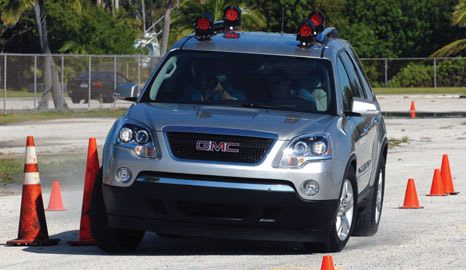
When a vehicle’s wheels lock up on wet and slippery roads or during a panic stop, the driver may lose traction and control, causing the vehicle to spin. Anti-lock brake systems (ABS) keep wheels from locking up, so the vehicle maintains directional control around hazards.
Photo: General Motors
General Motors is focused on providing comprehensive safety before, during, and after a crash. Before, according to the manufacturer, means avoiding a crash. GM has several safety innovations that help keep a vehicle on the road and in one piece.
StabiliTrak Saves Lives
In 1997, GM first introduced StabiliTrak, also known as electronic stability control (ESC), on its vehicles. Using sensors to detect the difference between the steering wheel angle, the direction the vehicle is turning, as well as other situational factors, StabiliTrak applies quick, precise force to the appropriate brakes to help drivers control a vehicle’s direction and keep it on course.
In low-traction conditions such as ice, snow, gravel, wet pavement, and uneven road surfaces, StabiliTrak helps significantly reduce single-vehicle crashes, according to the Insurance Institute for Highway Safety (IIHS). The federal government is mandating ESC on all new light vehicles by 2012. According to the manufacturer, all GM retail cars and trucks sold in the U.S. will have ESC standard by the end of 2010.
Anti-lock Brakes Stop Vehicles Quickly
When a vehicle’s wheels lock up on wet and slippery roads or during a panic stop, the driver may lose traction and control, causing the vehicle to spin. Anti-lock brake systems (ABS) keep wheels from locking up, so the vehicle maintains directional control around hazards.
ABS reduces the chances of wheel lockup by rapidly adjusting brake pressure. More specifically, ABS automatically changes the brake fluid pressure at each wheel to maintain optimum brake performance — just short of locking up the wheels. An electronic control unit regulates brake fluid pressure in response to changing road conditions or impending wheel lockup.
ABS works with the StabiliTrak system and is currently standard on most 2008-model GM vehicles.
Traction Control Keeps Vehicles on the Road
By selectively applying brake pressure to individual wheels, traction control helps reduce wheel spin on loose or slippery surfaces, according to GM. In the past, drivers had to feather the gas pedal to prevent the drive wheels from spinning wildly on slippery pavement.
Traction control systems are designed to help prevent a vehicle from slipping and sliding during acceleration. They improve vehicle stability by controlling the amount the drive wheels can slip when extra power is applied. The system automatically adjusts the engine power output and, in some systems, applies braking force to selected wheels during acceleration. Traction control is found primarily on vehicles with four-wheel, anti-lock brake systems and is standard on most 2008-model GM vehicles.
Additional Safety Features
GM vehicles that come equipped with all-wheel drive (AWD) systems feature the ability to transfer torque to some or all wheels, depending upon conditions. According to GM, this allows the system to maximize fuel economy, traction, or both.
Additional safety features such as daytime running lamps have saved 433 lives and averted 85,000 crashes of all types since 1995, according to the manufacturer.
Another new innovation is Eye Cue. By projecting critical information such as speed, high-beam status, turn signal status, and “check gauges,” onto the windshield, Eye Cue helps keep eyes where they belong: on the road ahead.
More Safety

Nominations Open for 2026 Fleet Safety Award
Nominations have officially opened for the 2026 Fleet Safety Award Winner.
Read More →
Turning Connected Vehicle Data Into Decisions That Matter
Fleet leaders have more data than ever, but turning that data into clear, actionable decisions remains a challenge. This white paper shows how leading organizations are using connected vehicle data to improve safety, reduce costs, and optimize fleet performance. Learn how to turn insight into action across your fleet.
Read More →
Cameras, Safety and Insurance: From Reactive Claims to Real-time Prevention
Commercial auto remains one of the most challenging and costly lines of coverage for fleet operators and insurers alike. Learn more about how to effectively address these issues from Onur Aksan, Enterprise Business Development Executive, Geotab.
Read More →

NAFA Fleet Safety Symposium to Collocate With 2026 Fleet Forward Conference
The daylong certificate program will precede the Fleet Forward Conference at the Gaylord National Harbor in Maryland.
Read More →
The Distractions You Can’t Turn Off: What Drivers Face Outside the Vehicle
Fleet drivers face constant visual, cognitive, and environmental interruptions the moment they hit the road. From roadside chaos to mental fatigue and digital overload, today’s biggest driving risks often come from outside the vehicle itself.
Read More →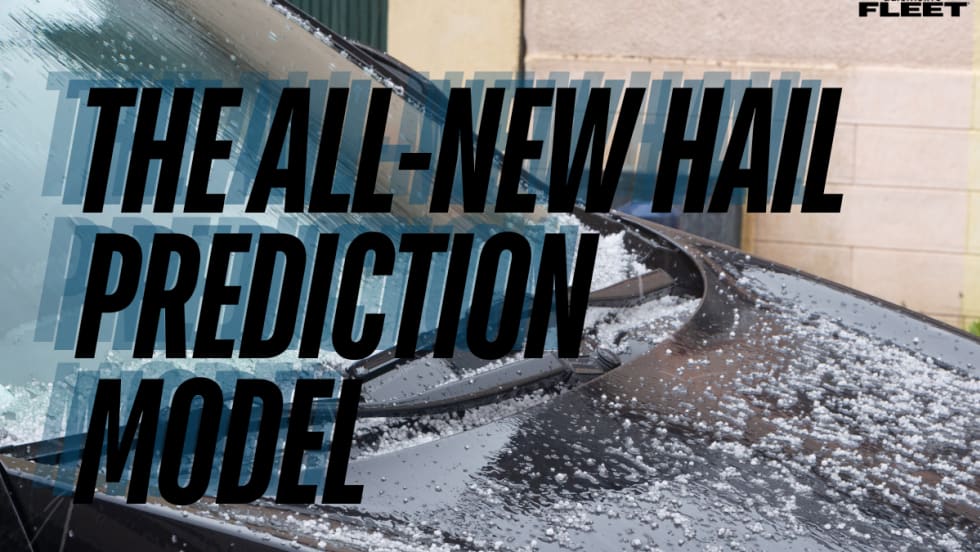
FLASH Weather AI Launches First Deep-Learning Hail Prediction Model With High-Resolution Forecasting
FLASH Weather AI has launched a first-of-its-kind hail prediction model capable of forecasting hail size and arrival time at 1-kilometer resolution up to 55 minutes ahead, giving fleets and insurers critical time to prepare for severe storms.
Read More →
How Coca-Cola United Protects Its Fleet from Growing Legal Risk
As litigation risk rises, vehicles are increasingly targeted. This Coca-Cola bottler shares how it’s reducing exposure through driver training, technology, and a proactive risk management approach.
Read More →
How to Speak the Same Language on Fleet Safety
Drivers, supervisors, and data often speak different safety “languages.” Getting on the same page will drive better results.
Read More →
Fleet Cybersecurity 101: What You Need from Your Technology Vendors
From identity management to third-party certifications, the right technology partner should make security easier to manage. Here are the three building blocks that fleet managers need to stay in control as connected systems scale.
Read More →
Reducing Risk by Eliminating Phone Use Behind the Wheel
Distracted driving remains one of the most persistent risks in fleet operations. New approaches focus on removing mobile device use entirely while adding real-time safety support.
Read More →