




Bausch & Lomb Expands its Vision of Alt-Fuel
Bausch & Lomb has deployed flex-fuel, hybrid, and four-cylinder vehicles into its fleet, to reduce greenhouse gas emissions and cut fleet costs.

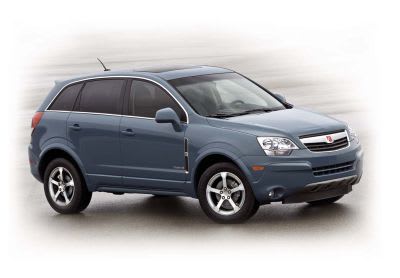
Saturn VUE Hybrid
[EMPTY CREDIT]
Bausch & Lomb, headquartered in Rochester, N.Y., runs a 400-vehicle fleet. In early 2007, the company began “greening” the fleet, deploying Chevy Impala, Uplander, and Express van flex-fuel vehicles, which run on E-85, and Saturn VUE Hybrids. In the 2007 model-year, the company deployed 12 Saturn VUE Hybrids in large cities, such as Los Angeles, Atlanta, and New York as part of a pilot program.
Driven by the company’s U.S. Commercial Sales Organization (including vision care, pharmaceutical, and surgical sales reps), alt-fuel and hybrid vehicles are targeted for replacement after 36 months. “We’ll conduct ongoing analysis to determine a best practice for replacement,” said Mark Dennis, who manages Bausch & Lomb’s fleet operations.
According to Dennis, future fleet strategy is targeted at deploying smaller four-cylinder models and additional hybrids across the U.S. and Canada. Dennis will gradually phase in these fuel-efficient vehicles during normal replacement schedules.
The vehicles will come enhanced with company-provided incentives, including leather interior, sun roofs, and OnStar upgrades such as turn-by-turn navigation.
“Driver response and feedback have been extremely positive, especially with the Saturn Aura model that was just introduced this year,” Dennis said. “Positive comments about design, handling, fuel efficiency, and safety, especially with OnStar, have been the most common.”
Phasing Out Large Fuel-Consuming Vehicles
Dennis anticipates eventually phasing out use of SUVs and other large fuel-consuming vehicles by implementing smaller, more fuel-efficient models.
“Considering Bausch & Lomb is in the healthcare business, sustainability and social responsibility is very important in the eyes of our consumers,” said Dennis.
Bausch & Lomb’s 2007 Fleet Management Initiative aims to reduce greenhouse gas (GHG) emissions and cut overall fleet costs. While the company’s alt-fuel and environmental initiative is relatively new, Bausch & Lomb has already successfully reduced SUV utilization by more than 60 percent, and its anticipated fuel ratings for all new models deployed into its fleet is anticipated to run approximately 24 mpg by year-end versus 19 mpg at the beginning of the year.
“Also, key environmental modules, complied by our fleet service provider PHH Arval, reveal the replacement models, put into service this year alone, have reduced GHG emissions by 32 tons year-to-date, with 100 tons projected by year-end,” Dennis said.
Plans are in place to deploy additional Saturn Aura and Chevy Malibu Hybrids later this year and into 2008, to account for projected GHG emission reductions of nearly 200 tons by year-end 2008.
More Fuel
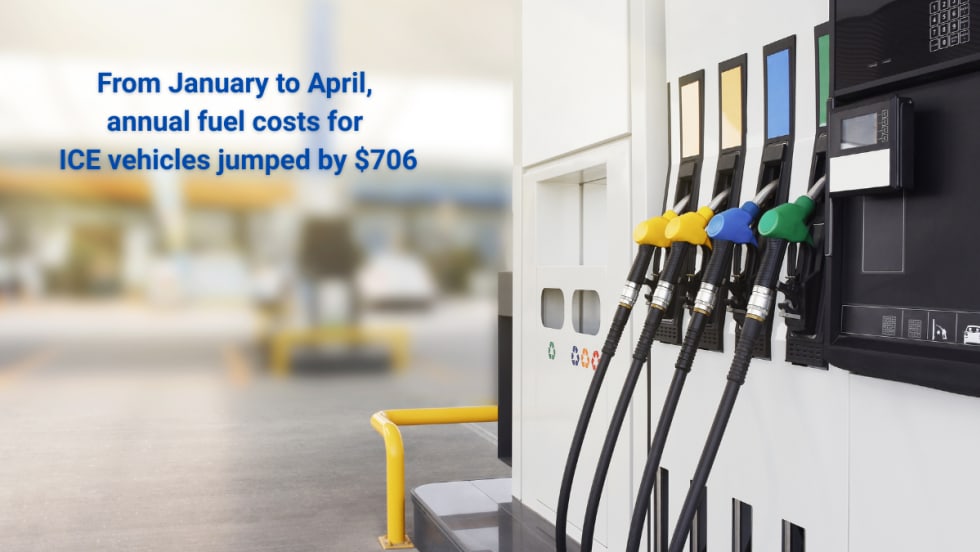
Study: How 2026's Gas Price Hikes Affect Different Vehicle Types
New data from iSeeCars reveals how rising fuel costs have affected different vehicle segments as gasoline prices climbed nearly 46% over the past four months.
Read More →
Are You Tracking Your Fleet's True Total Cost of Ownership?
Bobit Business Media surveyed 190 fleet professionals and found that while most fleets are tracking costs, fragmented systems and data gaps are keeping true TCO visibility out of reach. With rising pressure to control spend in an increasingly volatile environment, the gap between what fleets think they know and what the data actually shows is wider than you might expect. See how your peers are managing costs today and where the industry still has room to improve.
Read More →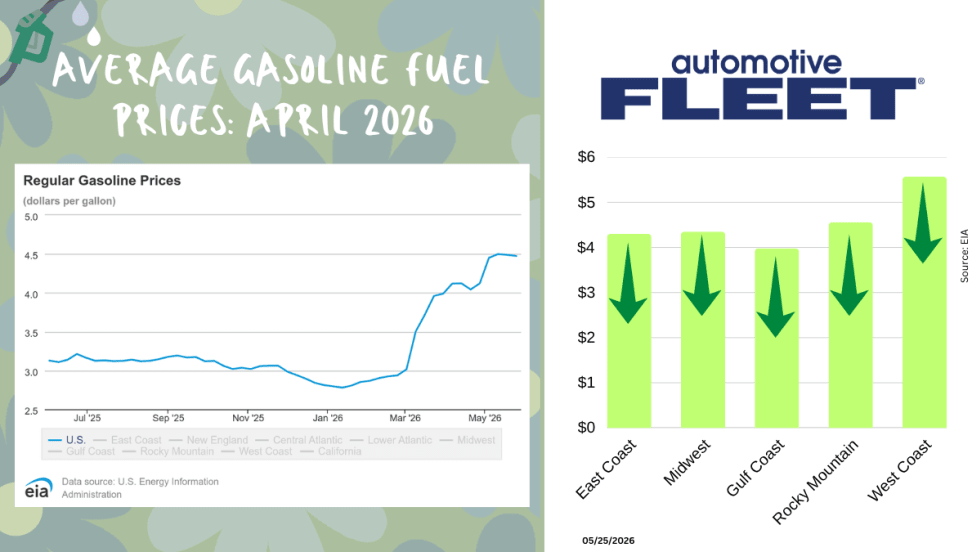
May Fuel Update: All Regions Experience Declines
Gas prices are finally easing in much of the country, but experts warn global tensions could quickly reverse the trend as the national average remains well above last month’s levels.
Read More →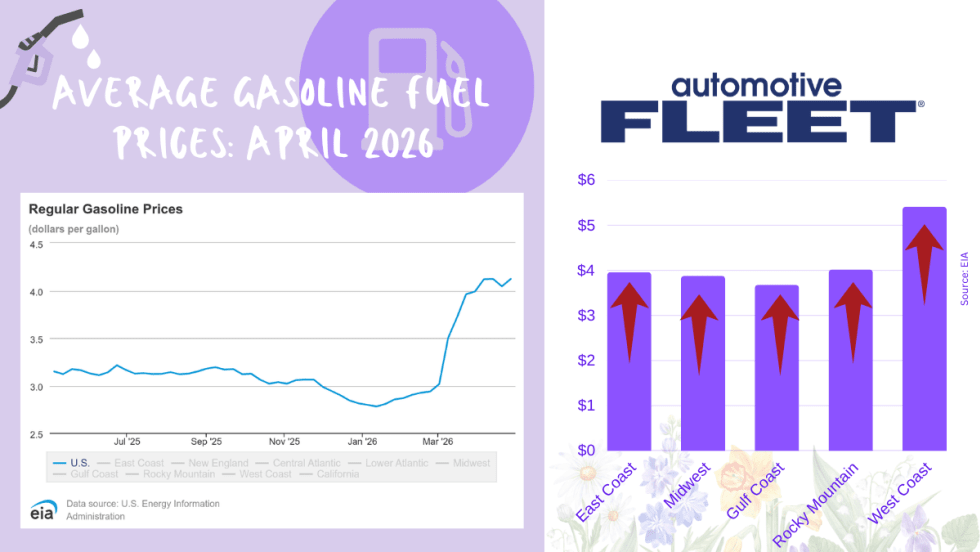
April Fuel Update: Prices Climb Above $4 as Spring Surge Accelerates
National average jumps to $4.04 per gallon, up sharply from last year, with West Coast prices topping $5 and further increases expected amid rising oil tensions.
Read More →
Tips from Fleet Managers on Saving Fuel Costs
Fleet leaders share practical strategies to reduce fuel spend through smarter policy, routing, and driver guidance.
Read More →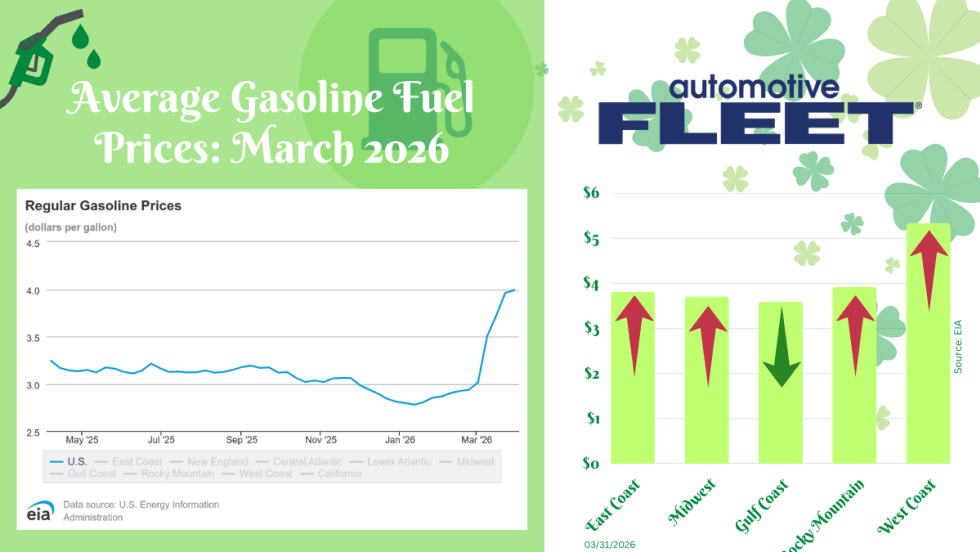
March Fuel Update: Prices Settle With a $4 Average
Fuel prices significantly slowed this week, but a $4 national average is still expected.
Read More →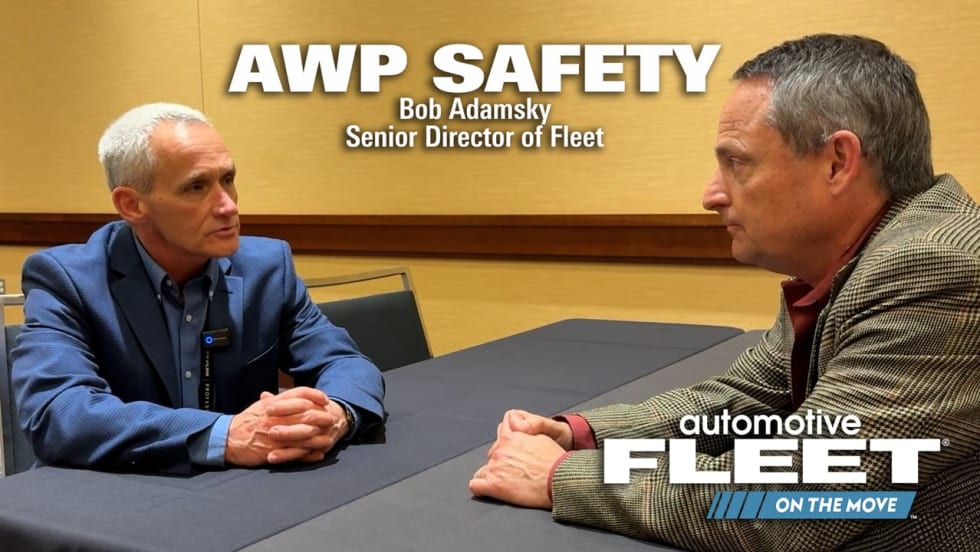
Bob Adamsky on Fuel Volatility: “Don’t Panic — Have a Plan”
With oil prices rising again, AWP Safety’s fleet manager shares how to respond to rising fuel costs and how the right strategy can turn fuel spikes into cost-saving opportunities.
Read More →
Oil Market Turbulence Is Complicating Fleet Cost Planning
Rapid swings in crude oil prices driven by the conflict in the Middle East could create longer-term cost pressures for fleets, affecting fuel prices, supply chains, and vehicle strategy, says NTEA’s Andrew Wrobel.
Read More →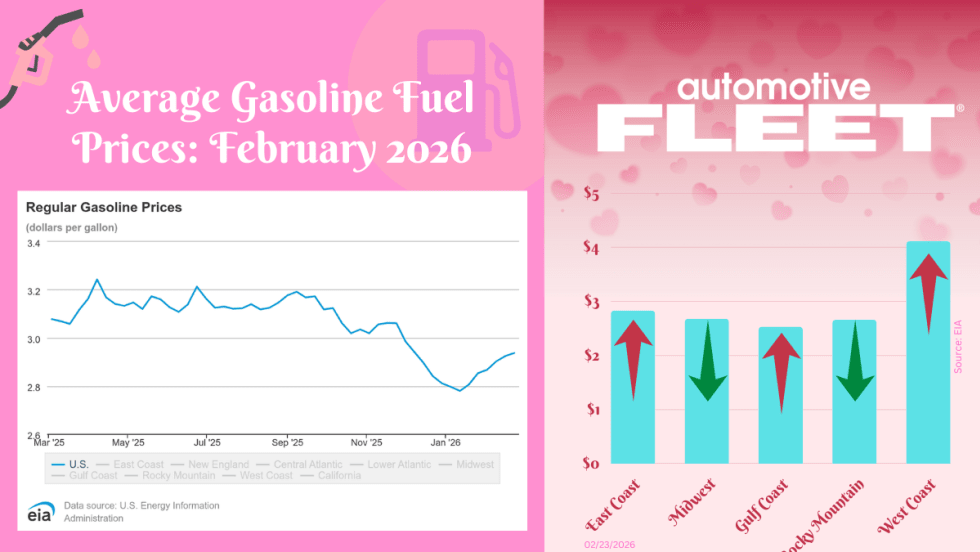
February Fuel Update: Prices Inch Higher for Third Week in a Row
The final February fuel update reveals prices continuing to inch higher for the third week in a row.
Read More →
The 2026 Fuel Economy Guide: Updated Cost and Efficiency Benchmarks for Fleets
Fleet managers can use the DOE’s 2026 Fuel Economy Guide to benchmark MPG across powertrain types using side-by-side vehicle ratings and compare new model-year options.
Read More →